Showing posts with label augmentation. Show all posts

Tuesday, October 23, 2012

A Reply to Lewitzky

Pseudo-Abstract:
The work uses Jozef Lewitzky's clever comments as a leaping point to engage with the in between spaces suggested by the previous work on the problem of free will in a machinic world. It is suggested that network-centrism is not a deified human-centrism but, rather, a foreign territory with a full gamut of its own complexities. And, these complexities are largely incommensurable with current human perspectives.

Important Links:
The original work, which contains Lewitzky's comment.


I would like to start by saying that Jozef Lewitzky's comment to Deepening the Narcissistic Wound is an excellent series of thoughts in its own right. I will address each in turn.

Disregarding the Individual:
Lewitzky's observation that emerging network-centric intelligences necessitate the deconstruction of humanity, individualism, and intelligence is a case in point. Yet, one must question whether or not these intelligences are in fact "higher." It seems, rather, more suitable to argue that these intelligences are just 'different.' And, that this difference is unsuitable for the human-centric mentalities of the passing era.

Progress to Obsolescence:
There are many layers to Lewitzky's point here. First, the "I" is an elegant indication of the past age. And, though "I" am all for its annihilation (a contradiction in itself), this annihilation can only ever be partial. Much as the child decentrates from their personal, concrete perspective on the world to the logico-mathematical frame of abstractions, the new perspective never fully disregards the old. And, in various contexts, the child may return to this prior age in order to better frame a new problem. Similarly, the "I" is here to stay. Yet, the containers of that "I" must learn that it is not the only way and it is not even the best way in certain contexts of being. Though "I" will always be "I," the inability to imagine a world without "I" can only lead to a permanent ignorance of the new era.


On augmentation, humanity has already succeeded and continues to do so. The degree to which the flesh has become such a pervasive obsession seems to indicate the degree of this success: the body cannot be a fetish to those that necessitate it for subsistence. Like water to a fish, as 'they' say. The argument is that this fetishism is not necessary for persistence. Rather, the body will last as long as it is necessary with or without the over-attachment that is rampant today. And, one would expect that there is a very real possibility it will never completely be obsolete. As plants and animals 'feed' the life forms of more complex systems, humans may be necessary for the subsistence of machinic lifeforms. What is a computer virus without the largely human-centric relations that maintain it.


Praising Limitation:
Lewitzky's positive valuation of limitation is already a sophisticated position. The intent is not to challenge it here. Nor should one expect it ever to end. Networks have limitations just as humans have limitations but they are incredibly different. To cast them in humanity's light, to anthropomorphize, would be a major failing.

Self-reflexivity, however, is not of this form. The distribution of a peer-to-peer network as the members converge upon their identity and action as a network may be indicative of such reflexivity; though, the system really rides the cusp of the sapiens machina. To stray further into the alien, the convergence of the algorithms that trade stocks at speeds well beyond human capability may act and interact within their own system of relations in ways that warrant a description as 'reflexive.' Yet, to describe either network as an individual redefines the term so far outside its normal boundaries that any classical associations are incoherent. To 'localize' some portion of a broader network, in contrast, may well be a worthy endeavor that is devoid of the connotations and associations of the human-centric 'individual.'

Though the valuation of these things to a network is completely incomprehensible to me, the assumption that this valuation does not exist is the epitome of human-centrism. It is the human way to 'Other' all that it is foreign and unfamiliar. What needs to be done instead is find a way in which to communicate, much as one might when meeting a foreign 'human' culture.

Doomed from the Start:
Lewitzky is absolutely right: there is something 'human' that cannot be extracted from a network. And, it was a failing of the previous work to suggest otherwise. It is incredibly challenging to critique the old framework without setting oneself in opposition to it. This is why the annihilation, or perhaps abandonment, of the very distinction between humanity and machine was proposed; though, this probably just seemed contradictory when compared to the original, apparent opposition.

Accountability, on the other hand, is of the utmost importance in this new framing. It also offers an interesting insight into the problem of individuality. As an example, take the PirateBay and all similar facets of the industry of digital piracy. Acts of centralized justice on this force have been largely impotent. And, the imposition of contemporary propaganda on the individual fares similarly. Personal accountability distributed through a decentralized framework has no efficacy. Any solution, if it is to come about, must operate on a different level of organization that is entirely contrary to current, individualistic thinking. For better or for worse, such decentralized 'organizations' will continue to persist along with contemporary human biases.


It is unclear whether all of this means the prototypical human is "doomed." Was the plant doomed when animals emerged? Are animals really 'higher' life forms? Or, perhaps, the hierarchy is misconstrued. For, in death, all animals, including humans, are but the food that enriches the soil of our ancestors.

Images Courtesy of:
http://contemporarycondition.blogspot.ca/2011/10/marxism-as-spiritual-bypassing.html
http://www.imagineeringcounselling.com/professional-services/
http://singularityhub.com/2010/06/17/ibms-watson-takes-on-jeopardy-you-can-challenge-the-computer-to-a-trivia-duel-video/
http://www.wired.com/underwire/2009/07/military-researchers-develop-corpse-eating-robots/
http://www.blacklistednews.com/Mysterious_Algorithm_Was_4%25_of_Trading_Activity_Last_Week/21915/0/38/38/Y/M.html
http://screenrant.com/movie-piracy-zombieland-video-on-demand-digital-download-solutions-kofi-35289/

Thursday, July 12, 2012

Contextualizing the digital: Qualcomm, Gimbal, and human devolution

A recent post by Scoble discusses a budding new age of mobile development that will bring our cyber realities back down to Earth. I had originally mentioned this idea in reference to Y!kes here. In this context, Qualcomm, through the Gimbal SDK, is bringing a method to track everything about a user at a hardware level. No longer will the developer just know general data like your longitude and latitude. They will know when you are in the kitchen, living room, car. They will know who you are with and what you are doing. They will be able to anticipate your every behaviour. Especially given the current spin in AI (1 2).

Those of you who have been following my posts will recognize this as a theme I have talked about before: the death of privacy. No matter that Qualcomm is 'protecting your information' by some means (never letting it leave your phone, if Scoble is correct). Ultimately, it is accessible and there will be a growing pressure to release it to advertisers. Beyond that, you will want to release it as the features that you will get in the process will be worth it. Finally, your privacy will be less valuable and the loss of treasured secrets will probably slip right by the average person (e.g., Scoble's favourites). I think this is a good thing. Our contemporary context requires that we get better acclimatized to machinic forms of organization as I described here.

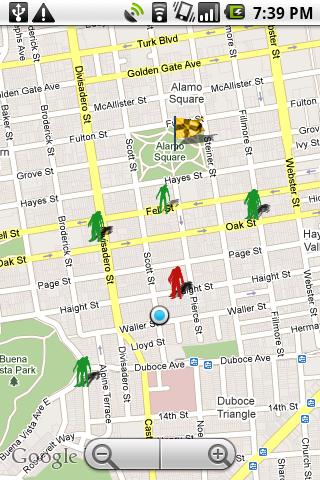
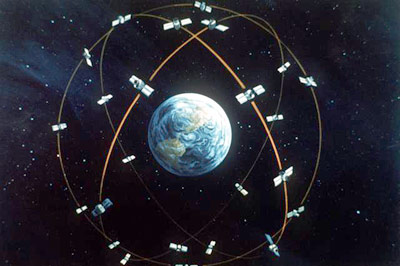
There is, however, a concern outside of such reified concepts as 'Privacy.' Initially the contextual augmentation provided by frameworks like Gimbal will be incredibly beneficial. It can expand our capacity to include related and relevant information in a particular context. However, this kind of augmentation simultaneously has the ability to restrict information by accentuating people's current frailties. Let us take an example: global positioning systems (GPS).


For someone who is familiar with maps, the cardinal directions (N E S W), the general layout of a city, etc., GPS is an excellent augmentation of the skills you already have. It offers constant updates to the maps; it can mark exact positions on the map; it can offer routes, modifications of those routes, and approximate times for those routes, among other things (traffic density, etc.). In a reversed sense, it can even describe the routes that other people who have the same GPS are most likely to take; though, I would be surprised if anyone has ever used it in this way (I have not). All of these things are beneficial and they do not detract from your skills nor reduce or restrict your informational intake. 

On the other hand, if you lack these skills then the GPS accentuates this fact. You can function that much longer without learning the skills and you could even come to the not entirely unreasonable conclusion that they are unnecessary. In your world, this is 'True.' That is, until something untoward happens and a lake is where it should not be, a road just ends where it should continue, or (heaven forbid!) your GPS breaks. Then suddenly you are at a huge deficit. The Road God has failed to answer your prayers. You had forgotten, or never knew, that the system has its limitations. Your faith was mistaken and something like this happens. However, to blame this occurrence on technology is absurd.

I have often heard such arguments as "the evolution of technology results in the devolution of man" and there is certainly legitimacy in the claim. This post is a brilliant examination of the problem. Amusingly, it took the GPS as an example much as I did. However, I believe that the overall claim of the author is mistaken. To be brief, I will restrict myself to a few points or rebuttals.


ONE:

The soul, when retroactively revolutionized through the contemporary, hyper-individualistic framework of the West, is obviously individualistic (here is a counter example to what follows and a case in point to what preceded). Interestingly, philosophical claims like Socrates', "Do your own work" are better approximated in the "collectivistic" frameworks that technology requires of us (not to be confused with "communistic" ideologies that may sound equivalent):


"And therefore we must consider whether in appointing our guardians we would look to their greatest happiness individually, or whether this principle of happiness does not rather reside in the State as a whole. But the latter be the truth, then the guardians and auxillaries, and all others equally with them, must be compelled or induced to do their own work in the best way. And thus the whole State will grow up in a noble order, and the several classes will receive the proportion of happiness which nature assigns to them." (1, italics mine)


Thus, and to re-frame what I said about GPSs, it is not technology that makes humanity face all of the challenges described by Jorund and Junger, it is the very soul that these authors choose to defend. The mistake, as is often the case, stems from the presentist interpretation of the philosophical works in question. Though, I will restrict this claim purely to the individualism of the arguments of the aforementioned individuals. Their theories in general I cannot speak to. Regardless, this idea is best illustrated by my next point:

TWO:

Jorund goes on to critique technology with reference to Grasse's stigmergy: spontaneous, indirect responses to the historical remains of other members of a society's previous actions. And, with disdain, humanity is immediately compared to Grasse's topic of investigation: termites. However, in rebuttal I would indicate a similar, stigmergic insect: ants.

Ants, despite Jorund's disdain, are one of the most successful species that live on land (terrestrial metazoa) both for themselves and the ecosystems in which they participate. In a nutshell:

"Today ants occupy keystone positions in most terrestrial environments, serving as major conduits of energy and organic material. They are, for example, important turners of the soil, matching or exceeding the activity of earthworms in this role. They are among the leading predators of invertebrates in most ecosystems, and in the Neotropics they are the leading herbivores as well, with leaf-cutter ants taking more than 15% of the fresh vegetation (feeding it to a symbiotic fungus, which they in turn eat). Interactions with ants have shaped the evolution of diverse organisms to an astonishing degree."


Once more in contrast to Jorund, it is not the case that the success story of ants is driven by their "well-rounded, educated individuals." Ants tend to be rather specialized in their behaviour, and, even though this cannot be directly tied to their success, its abundance in the species must be indicative of some evolutionary use. This article discusses the topic and mentions an alternative explanation: specialization is beneficial simply because it prevents having to consider which task to do. Again, interestingly, this fits right into a machinic conception of organization. Neither the individual's skill nor the sub-population's specialization is key. It is merely the continued functional role that they provide in sum and this role can easily be filled by another, no matter the skill or genetic design.

THREE:

Jorund also notices the "convergence between the real and virtual world." However, it is viewed in a negative light with reference to The Matrix and something like E. M. Forester's The Machine Stops. The emphasis is naturally on our use of technology to forward our indulgences while humanity gets further lost in its fantasies-made-real in VR. Naturally, it is the very use of the term 'real' that irks me.


It is not that video games, synthetic pleasures, or virtual reality are more real. It is that real is no longer relevant. The term is obsolete as is the task of approximating and/or representing 'reality' (again, see my previous post). Both are artifacts of the past. And the search for capital 'T' truth is just as much so.

For those of you interested in this topic, I highly suggest the book Objectivity by Daston and Galison. It provides an excellent historical description of the search for this kind of 'Truth.' Thus contextualized, it is much easier to understand the usefulness of the methods we developed in search for truth while abandoning the unnecessary ideologies that are currently attached to them.

FOUR:

If the The Matrix is at all telling, humanity will not be able to survive without the suffering Jorund seems to enjoy--a suffering of thought projected.

"Did you know that the first Matrix was designed to be a perfect human world? Where none suffered, where everyone would be happy. It was a disaster. No one would accept the program. Entire crops were lost. Some believed we lacked the programming language to describe your perfect world. But I believe that, as a species, human beings define their reality through suffering and misery. The perfect world was a dream that your primitive cerebrum kept trying to wake up from. Which is why the Matrix was redesigned to this: the peak of your civilization." (1)

And, I might add, that the privileged Western position being critiqued is also being enjoyed by the author, if I am not mistaken. I, too, am privileged and believe suffering is productive, but I do not believe it is the only way: it would be hubris to think that the way things are now or the way things have been is the way they should or have to be.

FIVE:

In brief, humans are less dangerous to the planet and themselves when pacified. If this comes through VR, so be it.

I will leave you with two quotes from Dostoevsky, who Jorund was so genius to quote:

And we alone shall feed them in Thy name, declaring falsely that it is in Thy name. Oh, never, never can they feed themselves without us! No science will give them bread so long as they remain free. In the end they will lay their freedom at our feet, and say to us, "Make us your slaves, but feed us." They will understand themselves, at last, that freedom and bread enough for all are inconceivable together, for never, never will they be able to share between them! They will be convinced, too, that they can never be free, for they are weak, vicious, worthless, and rebellious. Thou didst promise them the bread of Heaven, but, I repeat again, can it compare with earthly bread in the eyes of the weak, ever sinful and ignoble race of man? And if for the sake of the bread of Heaven thousands shall follow Thee, what is to become of the millions and tens of thousands of millions of creatures who will not have the strength to forego the earthly bread for the sake of the heavenly? Or dost Thou care only for the tens of thousands of the great and strong, while the millions, numerous as the sands of the sea, who are weak but love Thee, must exist only for the sake of the great and strong? No, we care for the weak too. They are sinful and rebellious, but in the end they too will become obedient. They will marvel at us and look on us as gods, because we are ready to endure the freedom which they have found so dreadful and to rule over them- so awful it will seem to them to be free. But we shall tell them that we are Thy servants and rule them in Thy name. We shall deceive them again, for we will not let Thee come to us again. That deception will be our suffering, for we shall be forced to lie.

...

And all will be happy, all the millions of creatures except the hundred thousand who rule over them. For only we, we who guard the mystery, shall be unhappy. There will be thousands of millions of happy babes, and a hundred thousand sufferers who have taken upon themselves the curse of the knowledge of good and evil. Peacefully they will die, peacefully they will expire in Thy name, and beyond the grave they will find nothing but death. But we shall keep the secret, and for their happiness we shall allure them with the reward of heaven and eternity. Though if there were anything in the other world, it certainly would not be for such as they. It is prophesied that Thou wilt come again in victory, Thou wilt come with Thy chosen, the proud and strong, but we will say that they have only saved themselves, but we have saved all. We are told that the harlot who sits upon the beast, and holds in her hands the mystery, shall be put to shame, that the weak will rise up again, and will rend her royal purple and will strip naked her loathsome body. But then I will stand up and point out to Thee the thousand millions of happy children who have known no sin. And we who have taken their sins upon us for their happiness will stand up before Thee and say: "Judge us if Thou canst and darest." 

From Chapter 5: The Grand Inquisitor


Pictures courtesy of:

Sunday, June 24, 2012

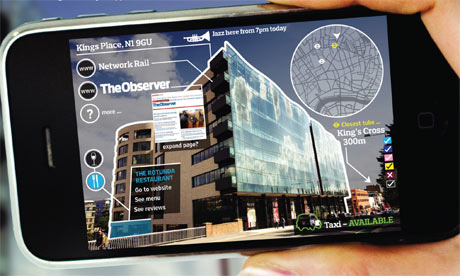
Augmented reality 2.0

It seems that I was previously mistaken. There are a number of groups that are implementing preliminary hardware and software for mobile and otherwise that is beginning to collapse the divide between our cyber and material worlds.

It's hard to comment on all of this stuff as I am a tad overwhelmed. Nevertheless, here are some preliminary thoughts.

For the games, I would like to see some gaming classics like PacMan get reinterpreted. It would also be nice to see someone explore the current limitations of our hardware so that we have an idea of where the boundary is in this domain. I think the explosion of excitement in this industry, though wonderful, had best be reined in. The domain is potentially infinite, but currently has some solid limitations in our hardware and software design. Rather than see programs and apps that really push the limits, I would like to see some slightly more modest but functional attempts. Take one facet of the infinite potential and develop it until it has some obvious practical usefulness. And, though I love these ideas (1 2), wearing a giant suit or helmet is... not feasible.

In this vein, I think I am following other thinkers. The importance of finding ways in which augmented reality, given its current limitations, can legitimately reinforce or support our current existence in our environments is pertinent. That is, given a camera, gps, a small screen or primitive glasses (1 2), an accelerometer and/or gyroscope, a live feed to the internet and the cloud, audio input/output, and a touch screen, what can be implemented?

The cloud offers the ability to extend our memory capacity if we can find a seamless way to 'recall' the information or begin to implement triggers (e.g., visual, auditory, etc.). If someone could find a way to integrate this with multilingualism (i.e., by having a list of common phrases, etc.), I think traveling would become much simpler.

The accelerometer and gyroscope offer an alternative to touch screens. Just hold your phone and swipe it around like a computer mouse. In fact, I'm surprised I have not seen any software implementing smartphones as UI for standard computers. Though, I have heard of other countries using it for UI more generically. And, actually, the idea of being able to graphically scan anything and have my smartphone find where I can buy it, virtually or otherwise, is certainly worth exploring.


This software has some interesting uses socially. I can see a time when people have clothing that encodes their 'avatar' (i.e., appearance) in cyberspace so that they are seen as such through AR. Subcultures, I'm sure, will be able to integrate this as an interesting form of identification. There are possible consequences here for gangs, etc.  as well as the police. On the extreme end, machines could be seen in a more anthropomorphic frame, which might have interesting repercussions for our relationships with them and we may be able to project our avatars to new places in order to send cues, or even interact with the world. Imagine your phone's 'ring tone' was the person appearing in your peripheral vision and waving at you. Interesting implications for the research I have heard on less invasive forms of human-computer interaction.

Actually, this would be an interesting way to implement some of the ideas I discussed previously. I could have it such that messages or social cues, interests, etc. are encoded right on my person (e.g., approachable, busy, single, etc.). If people start doing this with tattoos, that would certainly be fascinating. And, to forecast a future post, the ability to tag others given a particular network or context would be fascinating, too, especially with ratings.

Images courtesy of:
http://www.guardian.co.uk/technology/2010/mar/21/augmented-reality-iphone-advertising
https://t.co/5jjnouAY
http://strangehorizons.blogspot.ca/2011_06_01_archive.html

Thursday, June 21, 2012

iWitness and tech acceleration part 2

This is a continuation of my last post; the gist being that this new app is a surprisingly close approximation of a project I was working on myself. However, it is missing some features that I would like to describe.

A word of warning: I lack an internal description of the app's functioning. Hence, some of these adjustments may not be applicable or may have already been implemented.

First, it would be useful to have a brief description of each and every client that could be sent to the police in addition to their GPS coordinates.

Second, if raw GPS data is being sent, one can implement a more detailed description of the clients whereabouts leaving less processing on the side of the police. A lot of the difficulties associated with E911 are related to the challenges in locating an individual when they are not calling from a land line. The result is that an operator must reroute you from a central hub in order to place your call to the appropriate PSAP (i.e., valuable time is being wasted and you have to be able to speak). Thus, by sending even raw GPS data, iWitness is minimizing the second factor, but increasing the first if the integration is not seamless (i.e., processing of the raw GPS coordinates must occur without forewarning). My solution to this problem was to use this site to determine the nearest street address as well as the Country of origin (necessary for global implementation), etc. The long-term goal was to be able to route to the PSAPs directly.

Third, it would be my hope that the producers of iWitness will be keeping track of the statistical usage of their app. All of that data related to when and where the app is armed and fired is likely to be crucial for future systems. These systems, like Y!kes, will be able to use positional data to warn the client that they are entering a 'redzone,' for what reasons (e.g., by implementing a feedback system for clients), perhaps auto-arming, and/or auto-warning friends, family, or parents that this individual is in a vulnerable location or that their app is armed.

Fourth, I can see this augmentation of the 911 service quickly transferring to other emergency services: hospitals and fire departments. Distributed processing and decentralization would become crucial in these frameworks as the user becomes the ever-present eyes, ears, and hands of these services. Virtually unlimited amounts of information about households and medical records could begin to be stored by the users and for the users. And, if one user fails to indicate a problem, any and everyone else will have the capacity to capture valuable forms of information for transmission to the relevant services and vice versa from the services to the user. Location mapping and hotspots will become useful sources for community objectives while communities themselves become stronger through cross-communication. At least, this is the potential.

There are potential issues here regarding the security of this data, but these infrastructure kinks are likely to have been problems all along (i.e., the whole system needs to be updated). Thus, the fact that they are inescapable in this new framework is in some ways beneficial in that solutions will be sought and the system will adapt.

Similarly, distributed, user based networks are still criticized in some circles (e.g., Wikipedia in most Universities). The possibility of imprecise or blatantly incorrect data is always present. However, in my mind, as long as the users (on both sides) know the limitations, these primitive infrastructures are still better than none. Plus, even centralized data entry must be checked and rechecked.

In sum, as technology becomes ever present in our lives, society and its members are going to have to become more technologically inclined overall. Limited coding knowledge and understanding of electronic architecture is going to need to be basic parlance. Protective mechanisms will be no different than modern day clothing. The fact that we can currently run around naked in cyberspace does not legitimate the behaviour.

Wednesday, June 20, 2012

Y!kes: Implications for augmented reality

The current take on mobile applications demonstrated through the upcoming software Y!kes is an inspiration for us all. Too long have we lived in Descartes' rendition of cyberspace--a fact that is all the stranger given the ever increasingly pervasive smartphone. How is it that so few people are capitalizing on the capacity for this conveniently sized, networked, computer to augment our day-to-day reality? The answer eludes me. Nevertheless, I think the move Y!kes is taking is a big one, and not just for Hotels.
What Y!kes seeks to do is transform your mobile phone into a networked passport for your evenings away from home. Elevators pick your floor; doors unlock and lock themselves; your bed and breakfast is prepped on arrival at the airport. Surely, this is just the beginning.

I personally see this idea expanding into life in general and, especially, social networking. When you walk into your local store, relevant advertising and specials will pop-up on your phone (e.g., Google, Facebook, Cloudmade). Hotels will start registering you upon entering their establishment. Restaurants will start seating you, give you the menu, and begin ordering your food. Your mobile will create a seamless flow of relation without all the standard wait times and administrative hiccups. And this is just via position. Start scanning audio and this ever expands the framework of anticipation. Add visual scan and augmentation and you are really rolling. Perhaps this may all seem far away, but at the current rate of technological advancement how long, really, is 'far away?'

In the social sphere, I can see networking sites starting to really utilize the presence of the smartphone as Y!kes has. People will be able to scan for live profiles in their immediate vicinity, which will or won't be visible depending on the networks you are associated with. Social interaction will be augmented as individuals will already know each others likes and dislikes, favourite topics of conversation, and more. They will be able to ping one another to invite conversation or be in an 'open' status where meetings are always welcome. They will be notified when friends are close by, assuming they are 'live.' Social reality will be augmented.

So what are you waiting for Developers? Let the technological race begin!